
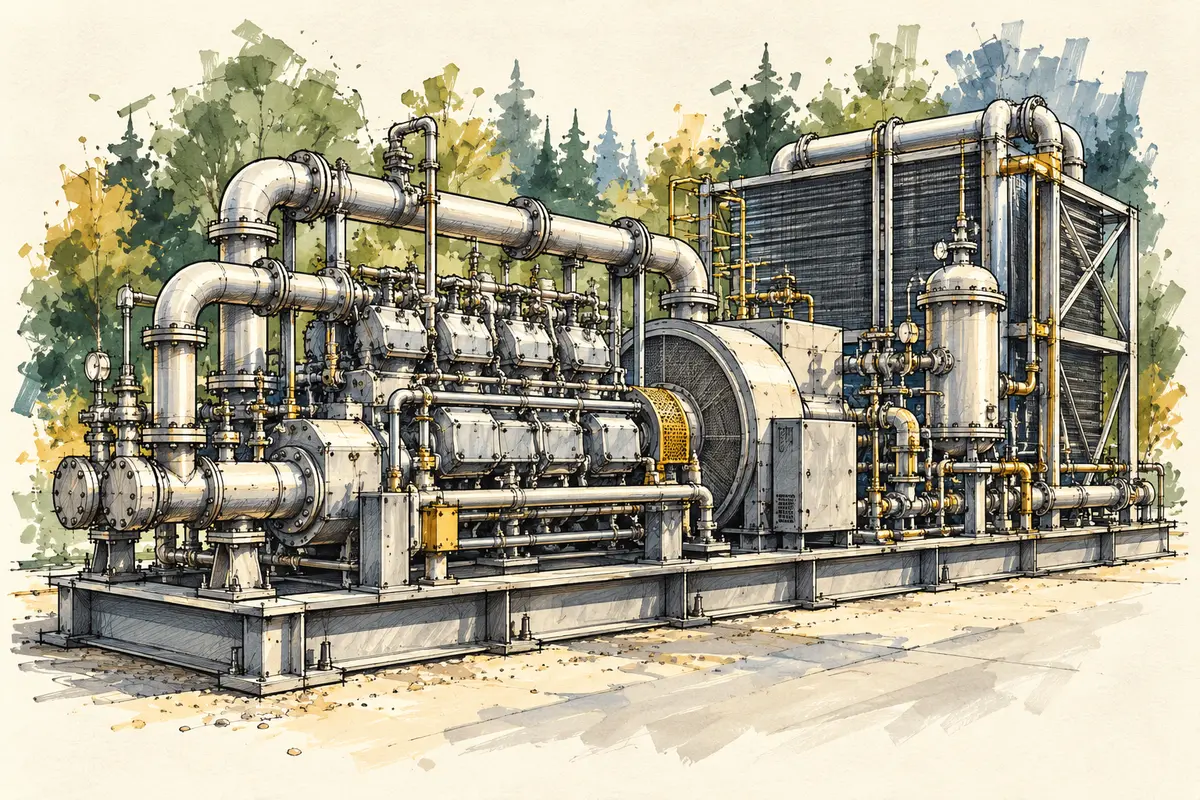
PRIVATE ENERGY SERVICES COMPANY
From a Management Buyout to an Employee-Owned Business
A divisional carve-out. Disciplined debt repayment. A later employee-led buyout.
- Historical revenue
- Approx. $40MM CAD
- Historical EBITDA
- Approx. $5MM CAD
- Buyout debt repaid
- Within 3 years
An Amati partner worked with management on a leveraged buyout of an energy services division from a larger company, helping establish an independently owned operating business. The transaction connected an ownership opportunity with the management team already familiar with the operation.
The business achieved historical revenue of approximately $40MM CAD and EBITDA of approximately $5MM CAD, with the acquisition debt repaid within three years. In a subsequent ownership transition, shares were sold to employees through their own leveraged buyout.
This example reflects a partner’s prior ownership and leadership experience. It shows how acquisition financing, operating discipline and succession can form successive stages of one business’s development.
Two ownership transitions with operating continuity at the centre
A divisional buyout must work as both a transaction and a standalone business. The initial financing has to leave room for working capital, ongoing investment and the realities of a cyclical industry. A later employee buyout adds a different challenge: providing shareholder liquidity while keeping the next owners and the business financially capable.
Establishing an independent operating business
Separating a division brings ownership, people, operating assets and financial responsibilities into a new arrangement. Management familiarity with the business is valuable, but the independent company also needs clear accountability and a practical understanding of the costs and resources it must support on its own.
Connecting leverage with repayment capacity
Acquisition debt makes the timing and reliability of cash flow central to ownership planning. The business repaid the buyout debt within three years, demonstrating the importance of connecting financing commitments with operating performance. Revenue and EBITDA provided measures of scale; cash available after operating needs determined the ability to reduce debt.
Enabling a subsequent employee-led buyout
The later sale of shares to employees created an internal succession route. An employee-led leveraged buyout connects the sellers’ objectives with the buyers’ financing capacity and the company’s future cash requirements. The transaction needs to support a workable ownership structure after closing, as well as a completed sale.
Building a team that could carry the business forward
An engaged management team provided continuity through the ownership changes and continued to lead the business. That depth matters in an internal transition: the people acquiring ownership need the capability to run the operation, make investment decisions and meet the responsibilities that come with leverage.
Ownership transition backed by operating substance
The example connects a management-backed carve-out, repayment of acquisition debt and a later employee ownership transition. Its significance is the sequence: ownership was established, leverage was reduced and a further succession route was completed while an experienced team remained involved.
For Amati’s clients, this experience informs advice on management buyouts, acquisition financing, shareholder exits and succession plans that must remain workable for the business after the transaction closes.
An anonymized example of a partner’s prior ownership and leadership experience. The initial divisional buyout and subsequent employee buyout were separate transactions. Figures are approximate historical operating metrics, not purchase prices.